Examining Structural Similarities Between Traditional French Roulette Layouts and Browser-Accessible Simulations Featuring Progressive Prize Pools
Bianca Fischer · Nov 8, 2026

Examining Structural Similarities Between Traditional French Roulette Layouts and Browser-Accessible Simulations Featuring Progressive Prize Pools
Traditional French roulette maintains a wheel with thirty-seven pockets consisting of numbers one through thirty-six plus a single zero while the table layout arranges these numbers in three columns of twelve with specific betting zones for rouge, noir, pair, impair, and the dozen bets. Browser-accessible simulations replicate this exact wheel configuration and table structure yet integrate progressive prize pools that accumulate across multiple player sessions. Observers note that the core geometry remains identical in both formats even as the online versions attach growing jackpots to certain inside bets or column wagers.
Wheel Architecture and Number Sequencing
The physical wheel in French roulette positions the zero between nine and twenty-eight on the cylinder with alternating red and black numbers following a fixed sequence that prevents clustering of similar colors or parities. Digital simulations copy this sequence pixel for pixel so the ball lands on the same neighboring numbers whether the game runs on a felt table in a European casino or loads inside a browser window. Researchers at gaming technology laboratories have documented that this preserved sequence ensures the mathematical distribution of outcomes stays consistent across both environments.
Table Layout and Betting Zones
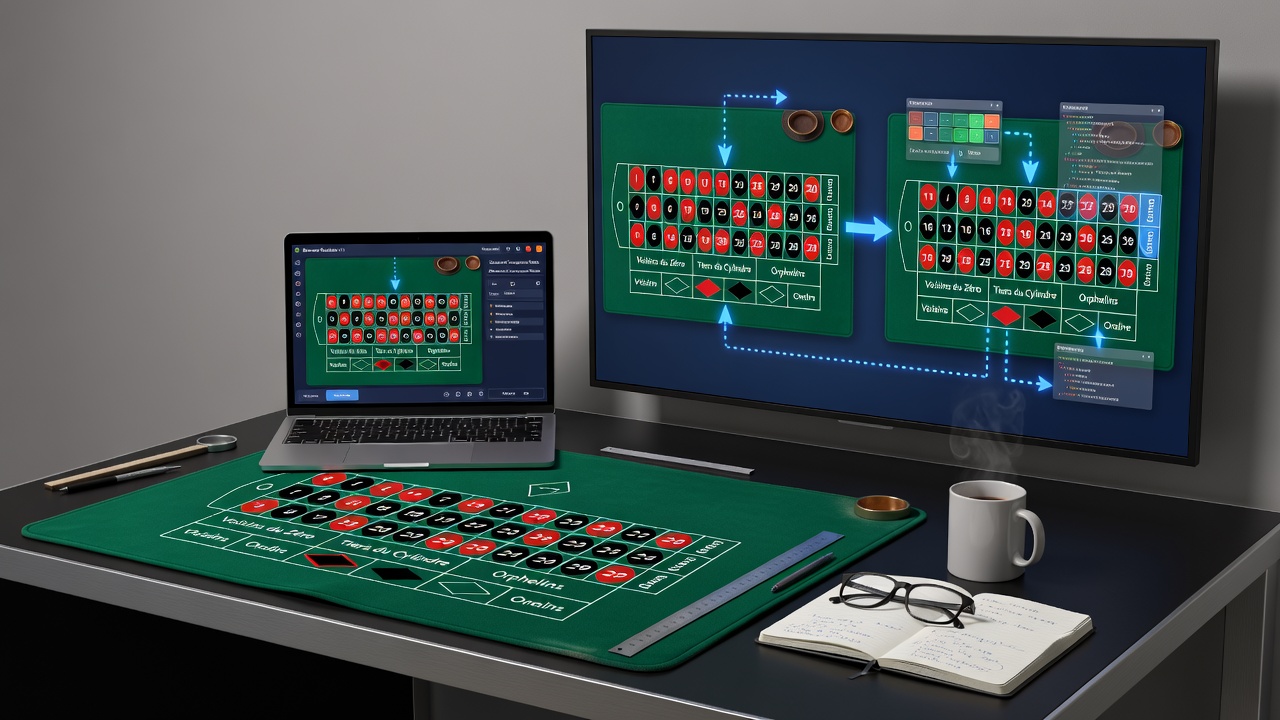
Layout elements such as the racetrack for neighbor bets and the call-bet area appear in identical proportions on physical tables and their browser counterparts. Progressive prize pools in the online versions attach to these same zones without altering their visual placement or the underlying payout ratios for standard bets. Data compiled by the Autorité Nationale des Jeux shows that French operators introduced progressive elements to inside-number clusters while leaving the outside betting grid unchanged from traditional specifications.
Progressive Prize Integration Without Structural Alteration
Browser simulations add a separate meter that tracks contributions from each qualifying bet yet keep the wheel and table graphics fixed to the classic French model. Players who examine side-by-side images often discover that the only visible difference lies in the jackpot display rather than any repositioning of numbers or betting chips. In November 2026 industry tracking services recorded a steady rise in progressive pool values attached to the zero and its neighbors while the surrounding layout stayed untouched.
Regulatory Frameworks Across Jurisdictions
European regulatory bodies require that any browser simulation marketed as French roulette must preserve the single-zero wheel and the En Prison rule on even-money bets. Canadian provincial regulators apply similar verification standards when licensing online platforms that feature progressive accumulators. A 2025 comparative study published by the Victorian Commission for Gambling and Liquor Regulation confirmed that layout fidelity remains a mandatory condition for product approval in multiple regions.
Technical Rendering and User Interaction
Developers render the wheel using the same angular spacing found on physical cylinders so the deceleration pattern of the ball matches recorded spins from land-based venues. Clickable betting areas on the digital table mirror the felt dimensions allowing players to place chips on the same intersections and street bets that appear in traditional French rooms. Progressive contributions trigger only after the bet registers within these unchanged zones preserving both the visual and functional continuity.
Statistical Distribution and Prize Pool Mechanics
Because the wheel sequence never changes the probability calculations for every bet remain identical whether the game includes a progressive component or not. Progressive pools grow through a small percentage taken from qualifying wagers and redistribute according to fixed rules that do not affect the base game mathematics. Figures released by the Pennsylvania Gaming Control Board indicate that progressive features have been layered onto established French layouts without requiring any redesign of the number grid or payout matrix.
Conclusion
Structural examination reveals that browser-accessible simulations retain the wheel sequence, table proportions, and betting zones of traditional French roulette while adding progressive prize pools as an overlay rather than a replacement. Regulatory documentation and technical analyses confirm this preservation across multiple jurisdictions. Observers who compare physical and digital instances continue to find the core architecture unchanged even as jackpot meters introduce new layers of accumulation on top of the established framework.